
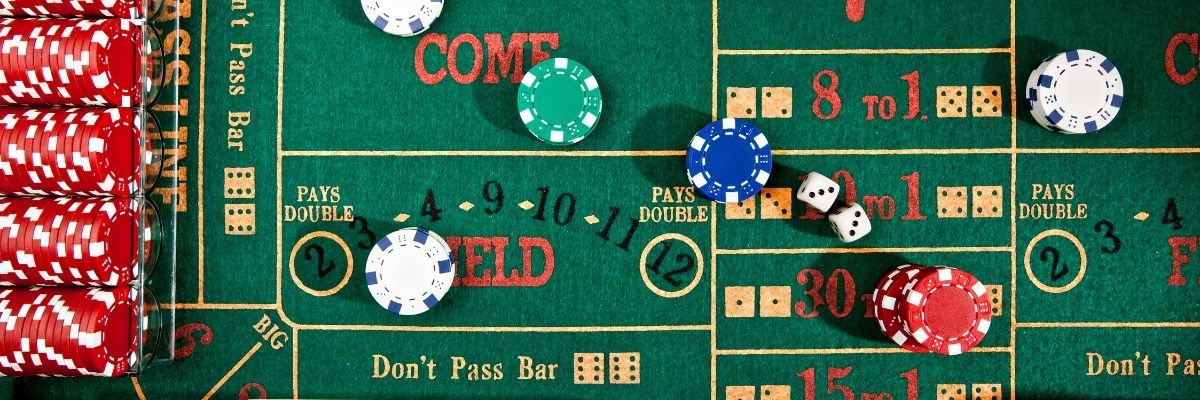
Stepping up to a craps table for the first time can feel like entering a foreign country. The sheer number of betting options, the rapid-fire dice rolls, and the enthusiastic shouts of the players can be overwhelming. But don’t let that intimidate you! Understanding the craps table layout is the first, and most crucial, step to enjoying this exciting and potentially lucrative game. This guide will demystify the felt and empower you to confidently place your bets.
The Craps Table: A Battlefield of Opportunity?
The craps table is essentially a rectangular table with identical layouts on either end, allowing more players to participate. This mirrored design means you don’t need to squeeze into a specific spot to make certain bets. The core of the table is where the action happens – the area filled with various betting options. Don’t worry, we’ll break it all down. Think of it like learning a map before a big adventure; once you understand the layout, you’ll be ready to join the fun!
Decoding the Common Bets: Your Starting Point
Let’s start with the most common and straightforward bets, the ones you’ll hear shouted most often. These are generally located in the middle section of the table and form the foundation of craps strategy.
- Pass Line: This is arguably the most popular bet in craps. You’re betting that the shooter will either roll a 7 or 11 on the come-out roll (the first roll of a new round), and you win. If the shooter rolls a 2, 3, or 12 on the come-out roll, you lose (this is called “crapping out”). If the shooter rolls any other number (4, 5, 6, 8, 9, or 10), that number becomes the “point.” The shooter then continues to roll until they either roll the point again (you win) or roll a 7 (you lose).
- Don’t Pass Line: The opposite of the Pass Line. You’re betting that the shooter will crap out on the come-out roll (roll a 2, 3, or 12) or roll a 7 before rolling the point. A roll of 12 on the come-out is usually a push (neither win nor lose) on the Don’t Pass Line, depending on the casino.
- Come Bet: This bet is similar to the Pass Line, but you can make it after the point has been established. Think of it as starting a new Pass Line bet within the existing round.
- Don’t Come Bet: The opposite of the Come Bet. You’re betting that a 7 will be rolled before the number established by your Come bet.
Taking a Closer Look: The “Field” and “Big 6/8”
Now, let’s move our attention to some bets that offer potentially quick payouts, but also come with a higher house edge.
- The Field: This is a one-roll bet. You’re betting that the next roll will be a 2, 3, 4, 9, 10, 11, or 12. Different casinos have different payouts for the 2 and 12 (usually 2:1 or 3:1). While it might seem appealing to have so many numbers covered, the odds are still slightly in the house’s favor.
- Big 6 and Big 8: These bets are located in the corners of the table. You’re betting that a 6 or 8 will be rolled before a 7. The payout is even money (1:1). However, these bets are generally considered sucker bets because you can make the same bet, with better odds, by placing a “Place” bet on the 6 or 8 (we’ll get to that shortly).
Diving Deeper: Place Bets and Proposition Bets
Ready to explore some more specialized areas of the craps table? These bets offer a wider range of payouts and risk levels.
- Place Bets (to Win): You’re betting that a specific number (4, 5, 6, 8, 9, or 10) will be rolled before a 7. The payouts vary depending on the number:
- 4 or 10: Pays 9 to 5
- 5 or 9: Pays 7 to 5
- 6 or 8: Pays 7 to 6
These are generally considered good bets because they offer reasonable odds compared to other options on the table.
- Proposition Bets (or “Prop Bets”): These are located in the center of the table and are usually one-roll bets with high payouts and even higher house edges. Examples include:
- Any Seven: Betting that the next roll will be a 7. Pays 4 to 1.
- Any Craps: Betting that the next roll will be a 2, 3, or 12. Pays 7 to 1.
- Ace-Deuce (or 3): Betting that the next roll will be a 3. Pays 15 to 1.
- Aces or Twelve: Betting that the next roll will be a 2 or 12. Pays 30 to 1.
- Eleven (or Yo-leven): Betting that the next roll will be an 11. Pays 15 to 1.
While the potential for a big win is tempting, remember that these bets are statistically unfavorable in the long run.
Understanding the “Hardways”
The “Hardways” are bets that a specific number (4, 6, 8, or 10) will be rolled as a pair (e.g., 2+2 for Hard 4) before a 7 or before the number is rolled “easy” (e.g., 1+3 for Easy 4).
- Hard 4 and Hard 10: Pays 7 to 1.
- Hard 6 and Hard 8: Pays 9 to 1.
These bets offer attractive payouts, but the odds of them hitting are relatively low.
The Rail and Chips: How to Interact with the Game
The rail surrounding the craps table is where you keep your chips. When placing bets, you’ll usually hand your chips to the dealer, who will then place them in the appropriate spot on the table. It’s important to clearly announce your bets to avoid any confusion.
Different casinos use different colored chips to represent different denominations. Familiarize yourself with the chip values before you start playing.
Etiquette at the Craps Table: Don’t Be That Guy
Craps is a social game, and observing proper etiquette is essential for a positive experience. Here are a few key points:
- Don’t touch the dice with both hands. Use one hand to roll.
- Don’t throw the dice wildly. Aim for the opposite wall of the table.
- Be mindful of other players. Avoid blocking their view or interfering with their bets.
- Tip the dealers. It’s customary to tip the dealers, especially when you’re winning.
- Know your bets. Understand the bets you’re making and the payouts associated with them.
Frequently Asked Questions
- What is the “come-out roll?”
The come-out roll is the first roll of the dice in a new round of craps. It determines whether the shooter wins or loses on the Pass Line and Don’t Pass Line bets, or establishes the point. - What does it mean to “crap out?”
To “crap out” means to roll a 2, 3, or 12 on the come-out roll, resulting in a loss for Pass Line bettors. - What is the house edge?
The house edge is the statistical advantage the casino has over the player in a particular game. Different bets in craps have different house edges. - What is a “marker?”
A marker is a plastic disc used by the dealers to indicate the point number. It’s placed on the corresponding number on the table. - Can I change my bets after the point has been established?
Yes, you can usually add to or take down certain bets after the point has been established, but some bets, like the Pass Line, cannot be removed. Always confirm with the dealer.
Wrapping It Up: Your Craps Table Journey Begins Now!
Understanding the craps table layout is your gateway to enjoying this exciting and complex game. By familiarizing yourself with the different betting options and their associated odds, you can make informed decisions and increase your chances of winning. Now, take that knowledge and step up to the table with confidence!